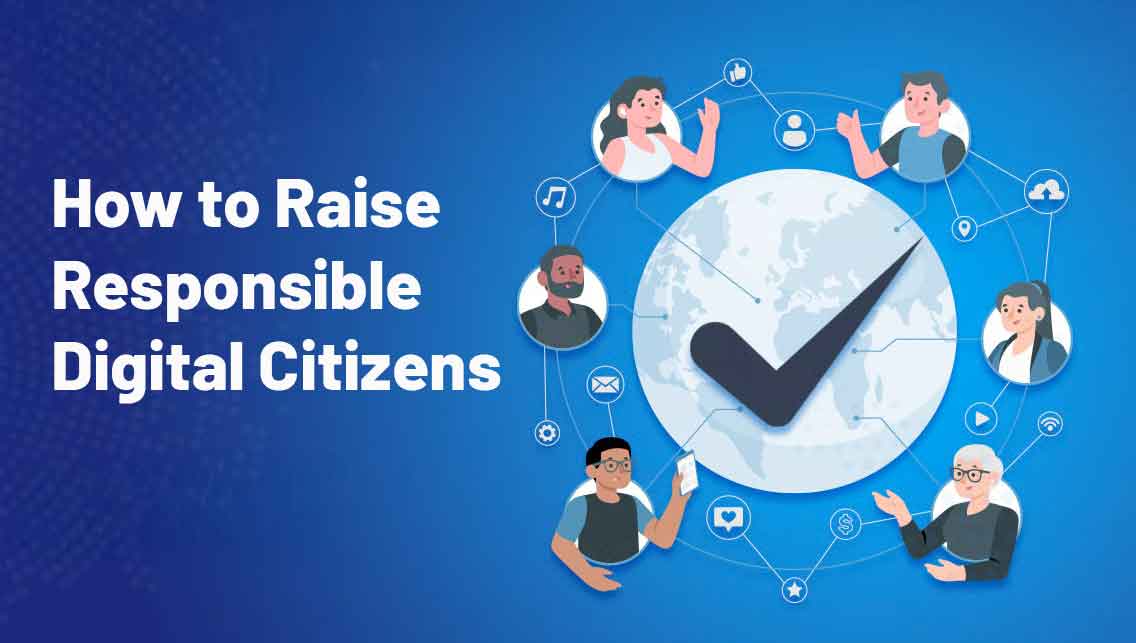
In today’s technology-driven world, children are growing up in a digital environment that offers immense opportunities – and significant risks. As educators and parents, it is our responsibility to guide them in using the internet thoughtfully, safely and ethically. Raising responsible digital citizens is not just about teaching rules; it is about instilling values that shape how students interact online.
Here’s how we can help shape responsible digital behaviour among our students:
1. Teach the Basics of Digital Etiquette
Just like we teach students to say “please” and “thank you” in real life, we must also teach them how to be polite and respectful online.
a) Explain the importance of kind language in chats and comments.
b) Discuss how tone can be misinterpreted in text and the importance of thinking before typing.
c) Encourage empathy: if you would not say it face-to-face, do not type it online.
2. Help Them Understand Online Safety
• Children need to know how to protect themselves and their personal information.
• Teach students to never share passwords, addresses, phone numbers or school details online.
• Guide them on creating strong passwords and the importance of keeping them private.
• Talk about the risks of accepting friend requests or messages from strangers.
• Emphasise logging out of devices when done, especially on shared computers.
3. Encourage Responsible Content Sharing
• What we post online often stays online. It is important that students learn to pause and think before posting.
• Teach the “Think Before You Post” rule – Is it true? Is it kind? Is it necessary?
• Remind them that photos, videos or comments can be copied, saved or shared – even if deleted.
• Discourage the forwarding of inappropriate or hurtful content.
4. Develop Critical Thinking Towards Online Information
• Not everything on the internet is true and students must be taught to identify reliable sources.
• Teach how to verify information by cross-checking with trusted sites.
• Introduce the concept of fake news, misinformation and biased sources.
• Encourage asking questions like: “Who wrote this?” and “What is their intention?”
5. Highlight the Importance of Screen-Time Balance
• Being responsible online also includes knowing when to log off.
• Encourage outdoor play, reading and hobbies to balance screen time.
• Set healthy limits on how long students should spend on devices.
• Explain the effects of excessive screen time on sleep, eyesight and concentration.
6. Promote Respect for Copyright and Digital Work
• Children must understand that just like books and movies, digital content belongs to someone.
• Explain what plagiarism is and why it is wrong.
• Teach how to give credit when using images, videos or text from the internet.
• Introduce simple citation techniques suited for their age.
7. Talk About Cyberbullying Openly
• One of the biggest challenges children face online is bullying.
• Encourage students to speak up if they experience or witness cyberbullying.
• Share examples of what cyberbullying looks like – mean comments, exclusion or threats.
• Reinforce that reporting isn’t “telling on someone”; it is about protecting oneself and others.
8. Be a Role Model
• Children observe and imitate adult behaviour, even online.
• Use your devices mindfully around students.
• Avoid forwarding unverified information in school groups.
• Demonstrate respectful communication in emails and messages.
Conclusion
• Raising responsible digital citizens is a shared effort between schools and homes. It begins with open conversations, continued guidance and setting examples ourselves. By teaching our students how to be safe, respectful and thoughtful online, we empower them to use technology as a positive force in their lives.
• Let’s equip our learners not just to navigate the digital world – but to thrive in it with integrity and responsibility.
Megha A Joshi
TGT-English